
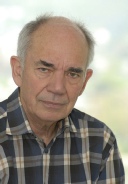


I have a longstanding (since 1971) interest in the effects of ionising radiation on health. My primary research interest is in how the cell is regulated. This work is stimulated by the relatively recent uncovering of the property of ionising radiation to induce instability in the genome and the related effect, the so called bystander effect in which a cell experiencing damage inflicted by ionising radiation affects surrounding cells, which then exhibit effects similar to the genomic instability. These are examples of epigenetic effects and I believe helps us to better understand how the mammalian cell works. My latest publication can be found here. In addition I have a number of other interests which can be found below. I am a Docent in the Department of Environmental Science at the University of Eastern Finland and responsible for preparing courses in health and ionising radiation as well as conducting research.
Keith Baverstock's homepage
Chernobyl accident
I have had a longstanding interest in the Chernobyl accident. My current interest is in an EC project, ARCH, to establish a strategic research agenda for the health consequences of the accident.
Depleted uranium
In 2006 I gave evidence to the Belgian Defence Committee on the toxicity of depleted uranium.
Risks of low doses
Whether low doses of ionising radiation delivered at low dose rates, as is typically the case for environmental exposures, lead to health effects is one of the most controversial issues. I have been involved in the topic since 1971. .
Lecture
In June 2006 I presented a lecture at the University of Exeter entitled “What kind of a thing is the genome?”. Although my ideas have been modified somewhat since then this lecture still remains valid in most parts.
A Biosketch detailing aspects of my career .
Contact: keith(at)kbaverstock.org

Essay
I hold the view that the coding sequence in DNA is not sufficient to define phenotype on its own; there must be another sort of information inherited along with the DNA. This essay says what that is and why it is needed. The title: "Only DNA? Really?"